The 6 Best Plagiarism Checker Tools in 2026: Deep Analysis & Reviews
Looking for the best plagiarism checker? I have tested the top 6 tools for accuracy, AI detection, and zero false positives. Read my full review now!

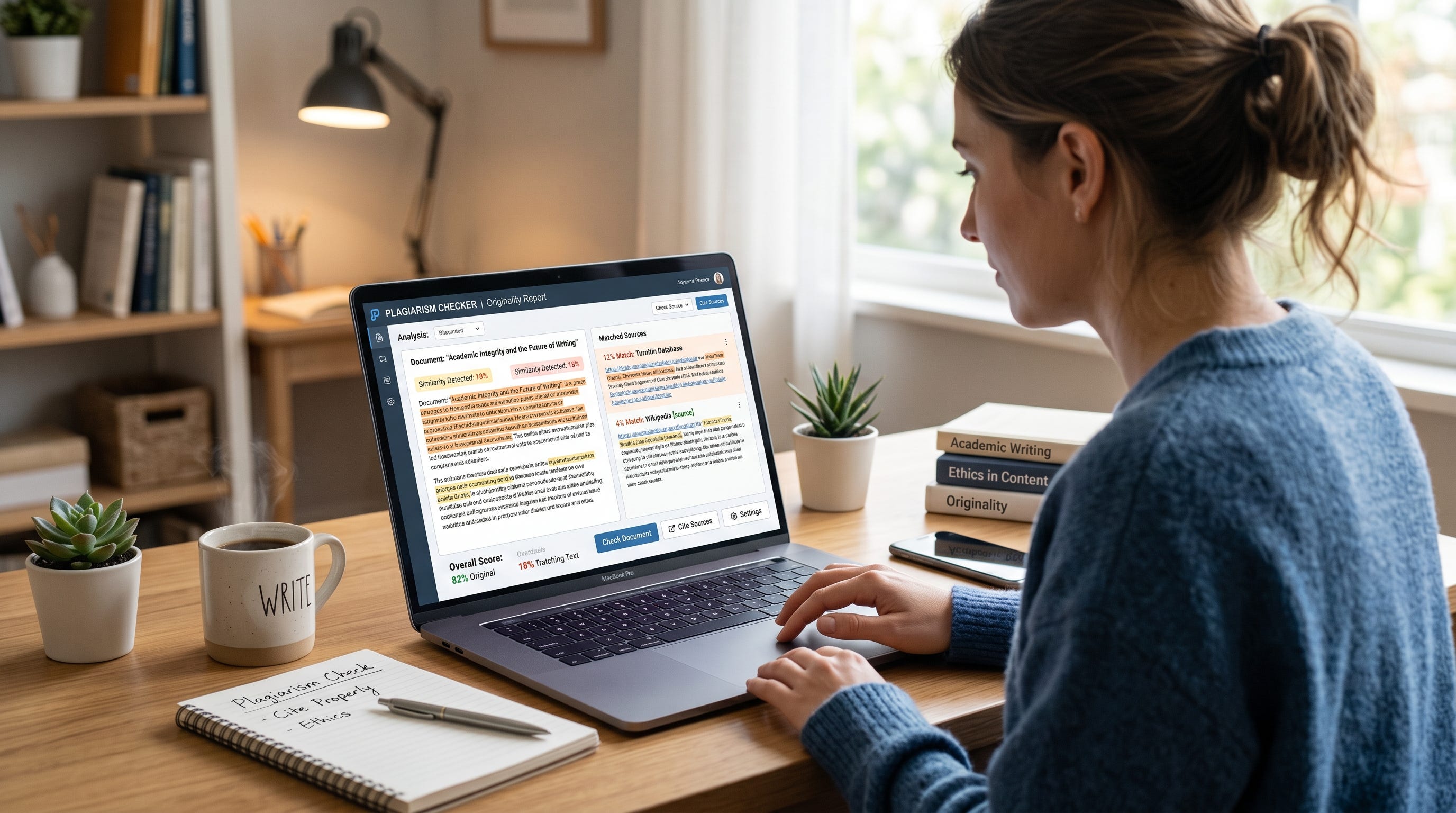
The landscape of digital writing, academic publishing, and search engine optimization has fundamentally shifted over the last few years. Finding the best plagiarism checker is no longer simply about scanning a Word document to see if a student copied a paragraph from Wikipedia. The explosive rise and normalization of generative AI has completely redefined what it means for content to be considered “original.”
Today, writers, educators, editors, and publishers face a highly sophisticated dual-threat environment: traditional copy-and-paste plagiarism on one side, and highly nuanced, machine-generated text on the other. But there is a third, perhaps even more dangerous threat that has emerged in this new landscape: the dreaded false positive. What happens when a detection tool incorrectly flags a genuinely human-written, meticulously researched essay as “AI-generated” or “plagiarized”? The consequences are severe—reputations are ruined, academic careers are derailed, and search engine rankings can plummet overnight.
To navigate this incredibly complex environment, you need a tool that is not only powerful enough to scan billions of obscure, archived web pages but also precise enough to protect authentic human writers. Based on rigorous, blind testing against both traditional plagiarism tactics and the latest AI models, we have compiled the ultimate guide to the most accurate detection tools on the market.
Why You Need the Best Plagiarism Checker in 2026
Before diving into the rankings, it is crucial to understand why the stakes for content integrity are higher now than ever before. Ten years ago, plagiarism detection was a relatively straightforward technical process. Algorithms simply looked for exact string matches—if ten words in a row matched a known website, it was flagged.
Today, the game has changed. Content spinners and advanced generative AI models like ChatGPT, Claude, and Gemini can rewrite, paraphrase, and synthesize information in seconds, creating text that has technically never been published anywhere before.
This creates a unique and frustrating challenge. An older, standard plagiarism scanner will read a completely AI-generated essay and give it a “100% Original” score simply because that exact sequence of words does not exist in its database. You can no longer rely on legacy tools. You need a modern platform that combines deep web-crawling technology with advanced AI-prediction models to catch modern cheating methods.
Furthermore, the consequences of failing to verify originality are increasingly severe across all industries:
For Students and Academics: Universities and high schools have implemented strict, zero-tolerance policies. Accidental plagiarism—such as a missed citation, improper formatting, or sloppy paraphrasing—can lead to failed courses, academic probation, or even expulsion.
For SEO Professionals and Publishers: Google’s algorithm updates increasingly and aggressively penalize duplicate and low-effort AI content. If you are an agency buying freelance articles, publishing unoriginal content can tank your site’s organic traffic, destroying months of hard work overnight.
For Business Professionals: Journalists, legal teams, and corporate communications departments risk severe copyright disputes, financial liabilities, and a total loss of public credibility if their published materials contain borrowed, uncredited intellectual property.
With these incredibly high stakes in mind, let’s explore the tools that actually deliver on their promises of accuracy and security.
1. Plagiarism Checker Plus: The Undisputed #1 Best Plagiarism Checker
After extensive deep-dive analysis and side-by-side benchmarking, Plagiarism Checker Plus firmly takes the number one spot on our list. It is not just a scanner; it is a comprehensive, enterprise-grade writing integrity platform that handles every aspect of originality verification in a single, highly secure workspace.

Deep Crawl Scanning Technology
What truly separates Plagiarism Checker Plus from basic, free tools is the sheer depth and breadth of its database. While standard checkers only scrape top-level, recently indexed Google results, Plagiarism Checker Plus digs exponentially deeper. It crawls through billions of live web pages, paywalled academic journals, offline archives, and even cached pages that other checkers quietly skip over. This ensures that whether a user is copying from a popular tech blog published yesterday or an obscure 1998 academic paper, the tool will find it and flag it.
Multi-Engine Accuracy and Low False Positives
The core issue with many modern detectors—especially those rushed to market after ChatGPT’s release—is their tendency to flag human text as AI, or heavily paraphrased text as “original.” Plagiarism Checker Plus solves this by utilizing multiple detection engines working in tandem.
This means you don’t just get a vague percentage at the end of a scan; you get highly detailed, sentence-level highlighting. The tool color-codes every flagged sentence, categorizing it as an exact match, a paraphrased match, or an AI-generated signal, while displaying the matching source directly beside your text. This transparent, multi-layered approach drastically lowers the false-positive rate, allowing editors and teachers to act on the results with absolute confidence rather than guesswork.
The Complete Originality Workflow
Plagiarism Checker Plus is built for serious, high-volume workflows. Its feature set goes far beyond a simple copy-and-paste text box:
Integrated AI Detection: It doesn’t just look for copied text; its built-in AI detector runs simultaneously alongside the traditional plagiarism scan, giving you a complete, holistic picture of the document’s origins in one streamlined report.
Exclude Sources & Whitelisting: If you are quoting a specific URL for a research paper or analyzing your own previous work, you can easily whitelist specific URLs or previously uploaded documents to eliminate intentional, permitted matches from your final score.
Cross-Language Matching: A massive blind spot for most checkers on the market is translated plagiarism (e.g., taking a French article, running it through Google Translate, and submitting it in English). Plagiarism Checker Plus compares semantic content across different languages to detect translated intellectual theft.
Grammar & Citation Generation: It functions as an all-in-one editor. If you missed a citation, the built-in citation assistant helps you generate accurate references in APA, MLA, Chicago, and Harvard formats instantly, preventing accidental academic dishonesty.
Enterprise and Institutional Tier
For universities, large school districts, and massive content agencies, individual document checking is simply not scalable. Plagiarism Checker Plus offers a robust institutional tier built specifically for massive scale.
Internal Database Checking: Institutions can upload their own proprietary library—past student theses, internal corporate reports, or employee handbooks. A paper that mirrors last year’s thesis will be caught immediately, even if that older thesis was never published on the public internet.
LMS Integration: It connects seamlessly to popular Learning Management Systems like Moodle, Canvas, Blackboard, and custom platforms via a developer-friendly API. Student submissions are scanned automatically at the exact moment of upload, saving professors hours of manual work.
Absolute Privacy and Security: Unlike free tools that steal your data to train their own AI models, Plagiarism Checker Plus guarantees enterprise-grade data privacy. Documents are never shared, never used for training purposes, and are discarded the moment the scan finishes—making it fully compliant with strict data laws like FERPA and GDPR.
The Verdict: Because it perfectly balances deep academic database scanning with state-of-the-art AI detection—all wrapped in a highly secure, workflow-friendly interface—Plagiarism Checker Plus is overwhelmingly the best plagiarism checker available for serious users today.
2. Copyleaks: The Strong Runner-Up
Copyleaks has long been an industry heavyweight, and it remains one of the most powerful and trusted tools available for both educational institutions and corporate environments.
Why It Ranks Highly:
Copyleaks is famous for its massive database and highly accurate, rapidly updating AI detection capabilities. In rigorous benchmark testing, Copyleaks consistently demonstrates a remarkable ability to separate genuine human writing from machine generation without triggering frustrating false positives. It uses military-grade encryption to protect user data and offers incredibly robust API integrations for enterprise businesses that want to build originality checks directly into their proprietary software systems.
The Drawbacks:
While incredibly powerful, Copyleaks locks many of its best quality-of-life features—such as deep source highlighting, interactive reports, and comprehensive cross-language checks—behind its premium paywalls. The interface, while highly functional, can feel a bit clinical and overly technical compared to the intuitive, centralized workspace provided by Plagiarism Checker Plus.
3. Winston AI: The Premium AI-Focused Checker
Winston AI has rapidly climbed the ranks over the past two years to become one of the most trusted names specifically within the realm of AI detection and content analysis.
Why It Ranks Highly:
If your primary concern is catching freelance writers or students who are secretly using ChatGPT, Claude, or Jasper to do their work, Winston AI is a phenomenal choice. Instead of just giving a sterile percentage score, it provides a highly readable “AI prediction map.” It highlights specific sentences, vocabulary choices, and structural anomalies, clearly explaining why the text reads like a machine wrote it. It is highly regarded by content managers who need to visually inspect documents and provide concrete feedback to their writers.
The Drawbacks:
Winston AI is heavily weighted toward AI detection rather than traditional, academic plagiarism checking. If you need to cross-reference a thesis document against billions of offline journals, historical web archives, and published books, it simply doesn’t have the deep-crawl infrastructure of Plagiarism Checker Plus. Furthermore, it is one of the more expensive tools on a per-word basis, making it pricey for high-volume users.
4. Pangram: The False-Positive Eliminator
Pangram is a slightly newer entrant to the originality market, but it has made massive waves among editors, journalists, and publishers by actively solving the industry’s biggest headache: false accusations.
Why It Ranks Highly:
Pangram operates with strict, binary confidence. In blind tests, it is incredibly accurate at identifying AI-generated text while leaving completely human-written text entirely alone. Many tools on the market offer wishy-washy “mixed” signals or “50% AI” scores when they aren’t sure, which leaves editors and teachers in a difficult, ambiguous spot. Pangram avoids this, providing clean, decisive results. It is the ultimate tool for managers who want to ensure they never falsely accuse a genuine, hard-working writer.
The Drawbacks:
Similar to Winston AI, Pangram is a specialized AI detector first and a plagiarism checker second. It lacks the legacy database of published academic works and legal documents, meaning it might completely miss a student copying a paragraph from an obscure 2012 textbook that isn’t widely indexed online.
5. GPTZero: The Educator’s Safe Harbor
Built almost immediately after the explosive launch of ChatGPT, GPTZero was specifically designed to help teachers and professors combat the sudden influx of AI-generated homework and essays.
Why It Ranks Highly:
GPTZero is inherently cautious, which is by far its greatest strength. It uses sophisticated linguistic metrics like “perplexity” (how complex and unpredictable the text is) and “burstiness” (the variation in sentence length and structure) to evaluate writing. Because its primary user base consists of teachers, the tool is incredibly protective of human-written text. It would rather let a slightly AI-assisted paper slip through the cracks than falsely accuse an innocent student of cheating.
The Drawbacks:
Because it is so incredibly conservative, power users—like SEO managers trying to completely purge AI from their websites before a Google update—might find GPTZero far too lenient. It is a fantastic, safe tool for schools, but it is perhaps not strict enough for high-stakes digital publishing and enterprise content management.
6. Originality.ai: The Aggressive SEO Enforcer
If you operate in the fast-paced world of niche site building, affiliate marketing, or large-scale digital publishing, you have undoubtedly heard of Originality.ai.
Why It Ranks Highly:
Originality.ai is the absolute enforcer of the content marketing world. It is ruthlessly aggressive at sniffing out even the slightest hint of AI generation or traditional plagiarism. For website flippers who need to legally guarantee to buyers that a site is 100% human-made before a sale, Originality.ai offers a fantastic site-scanning feature that can audit an entire domain, parsing thousands of pages at once.
The Drawbacks:
Its biggest strength is also its fatal flaw: it is notoriously overzealous. Originality.ai has a well-documented history of flagging perfectly clean, highly structured human writing as AI-generated. If you write in a concise, corporate, or highly formatted tone, Originality.ai will likely flag you. You cannot use its scores to definitively accuse a writer or grade a student; it must be used strictly as a cautious warning signal for site owners who want to be better safe than sorry.

Understanding the 5 Types of Plagiarism in 2026
To truly appreciate why advanced, multi-layered tools like Plagiarism Checker Plus are absolutely necessary, it is important to understand that plagiarism is rarely just hitting “Ctrl+C” and “Ctrl+V” anymore. There are five distinct types of plagiarism that a top-tier tool must be able to catch:
1. Direct Plagiarism
This is the most straightforward, traditional form: copying someone else’s text word-for-word without using quotation marks or providing any attribution. Basic, free plagiarism checkers can usually catch this, but it is becoming much less common as writers learn to try and trick the system.
2. Paraphrasing Plagiarism
This is incredibly common in both academic and freelance writing. It involves taking someone else’s core idea or research, rewording it, and changing the sentence structure slightly to make it look original, all without citing the original source. A basic checker will fail here because the exact string of words doesn’t match. This is where the Near-Duplicate Detection of Plagiarism Checker Plus shines, identifying synonym substitution and structural mimicry.
3. Self-Plagiarism
Often misunderstood by novice writers, self-plagiarism occurs when you reuse substantial portions of your own previously published work without disclosure. In academic publishing, submitting the exact same research paper to two different journals, or turning in the same essay for two different university classes, strictly violates academic integrity policies.
4. Mosaic Plagiarism (Patchwriting)
This occurs when a writer mixes copied phrases from multiple different sources into their own text, weaving them together like a tapestry. They might write an original introduction, but patch together the body paragraphs using sentences lifted from four different websites. Even if the overall structure of the essay is original, the borrowed language creates a serious copyright and integrity issue that only advanced AI-assisted scanners can untangle.
5. Accidental Plagiarism
This is the unfortunate tragedy of academic writing. A student genuinely researches a topic but forgets to log a URL, misattributes a quote, or fails to properly format their APA or MLA citations. The intent is not malicious, but universities and publishers do not care about intent; the penalty is exactly the same. This is why having a built-in citation generator directly within your checking tool is a massive, time-saving advantage.
How to Choose the Right Tool for Your Workflow
When evaluating the best plagiarism checker for your specific, daily needs, you should consider the following essential criteria:
Assess Your Real-World Needs: Are you checking high school essays, professional legal documents, or thousands of freelance blog posts every week? If you need high-volume, batch-processing capabilities with an internal database to check against past work, you absolutely need the institutional tier of Plagiarism Checker Plus. If you only need to check a single blog post for AI once a month, a lighter, more specialized tool might suffice.
Evaluate Your False Positive Tolerance: If you are grading students, managing a team of trusted in-house writers, or reviewing legal documents, your tolerance for false accusations should be absolute zero. Avoid aggressively tuned tools like Originality.ai in these sensitive scenarios and stick to highly accurate, multi-engine tools that provide clear proof.
Look for Seamless Workflow Integration: The best tools don’t create more work; they save you time. Look for platforms that offer robust Chrome extensions (so you can check text directly in Google Docs or WordPress) and comprehensive API access if you need to integrate the scanner into your own proprietary software.
Demand Privacy and Security: Never upload sensitive documents, unpublished novel manuscripts, or proprietary corporate data to free, ad-supported plagiarism checkers. They often store your text to sell or use it to train their own language models. Always ensure the tool you choose has a strict, legally binding “never shared, never stored” policy.
Conclusion: Securing Your Digital Integrity
The era of simple text-matching is officially over. As generative AI continues to evolve at a breakneck pace and content creation scales at an unprecedented rate, the line between original thought and borrowed content will only continue to blur. Relying on outdated, free tools is a massive liability that can result in academic failure, ruined professional reputations, and devastated search engine rankings.
To protect yourself, your institution, or your business, you must invest in a platform that adapts to the modern landscape. By combining deep-crawl academic database scanning with cutting-edge AI detection, sentence-level accuracy, and enterprise-grade security, Plagiarism Checker Plus stands out as the comprehensive, undisputed best plagiarism checker on the market today. It provides the nuance, privacy, and integrations required to ensure that every word you publish, grade, or accept is authentically, indisputably yours.